LTV Tech
LTV Tech
Protecting Lives, Powering Safety: PVSTOP Demonstrated Live with City of Tshwane Emergency Services

📅 11 September 2025
📍 Tshwane Emergency Services Training Academy, Centurion


A Groundbreaking Day for Solar Fire Safety in South Africa

On Wednesday, 11 September 2025, Civitas Risk Control (Exclusive Operations Company) and LTV Technologies & Supplies (Exclusive South Africa Distributor) were proud to host a historic live demonstration of the PVStop® fire safety solution for the the City of Tshwane Emergency Services. Held at the Emergency Training Academy in Centurion, this was the first public deployment of PVStop on South African soil—and the results were both powerful and promising.


Real Voltage. Real Danger. Real Protection.

With the rise of solar PV installations across Gauteng and beyond, the safety of our first responders has never been more critical. PV panels continue to generate high-voltage DC electricity, posing a silent but serious hazard to firefighters.

That’s where PVStop comes in: a light-blocking coating, patented spray-on solution that instantly de-energizes live solar panels, allowing rescue and suppression operations to proceed safely.

During the demonstration:

  • A test rig using three 455W solar panels in series was built to simulate live PV hazard conditions (~120V and 3A under moderate sunlight).
  • Halogen floodlights were used in parallel to visually confirm DC current flow.
  • Upon application of PVStop by LTV Technologies and Supplies CEO Johan Bosman, the system instantly dropped in current, visibly dimming the lights.
  • A second application by a Tshwane firefighter reduced the current to just 0.07A, confirming complete and safe de-energization.

“It was amazing to see the current drop so fast. You could see the hazard disappear right before your eyes,” said one of the attending fire officials.


Built for Fire Services – Backed by Engineering

What made the demonstration especially impactful was not just the product’s performance, but its relevance to real-world operational risk. Attending fire officers and safety officials saw firsthand:

  • The speed of application (under 5 seconds)
  • The ease of use (no prior disconnection needed)
  • Fast drying time (under 2 minutes)
  • Simple cleanup with no long-term panel damage, simply peels of and disposed as general waste
  • And most importantly: immediate voltage and amps reduction

Building a Safer Future, Together

PVSTOP is more than just a product—it’s a life-saving technology, taken o market by our PVSTOP technical partners, that manages our strict compliance frameworks.

The demonstration was also the culmination of months of collaboration between:

  • LTV Technologies & Supplies (exclusive SA distributor)
  • SBD Business Systems (infrastructure and partner alignment)
  • Civitas Risk Control (operational entity managing technical partners, compliance, and logistics)
  • And PVStop International (the OEM and patent holder)

The event follows earlier training, webinars, PV Safety and Risk training sessions, and ongoing awareness-building.

Civitas Risk Control oversees partner training, deployment compliance, and product distribution in partnership with LTV Technologies & Supplies — the exclusive South African distributor of PVStop.

If you are:

  • A school or university administrator
  • A facility or operations manager
  • A safety officer at a hospital, clinic, or factory
  • A municipal or provincial risk manager
  • A commercial landlord or insurance provider

Reach out to our team. Let us help you make your PV installation safer.

PVStop is here.


📸 Photos


Johan Bosman
✉️ info@pvstop.co.za
🌐 www.pvstop.co.za

Enhancing Emergency Readiness and the DC Danger Zone

Why Every PV Site Needs to adjust their Evacuation Plan

As the adoption of solar photovoltaic (PV) systems grows rapidly across South Africa, so too does the urgency to address the hidden risks that come with these installations — especially in schools, hospitals, shopping centres, and commercial facilities.

While solar energy is clean and renewable, DC electricity from PV systems cannot be switched off at the source and continues to pose a risk even when the main power supply is down. In the event of a fire, flood, or structural collapse, responders are often unaware of these hidden hazards — putting lives and assets at serious risk.


The DC Danger Zone: What You Need to Know

PV systems generate high-voltage direct current (DC) when exposed to light, and this electricity continues to flow unless properly isolated or blocked. Even during emergencies, most sites don’t have the right protocols — or trained personnel — in place to safely de-energize these systems.

Common safety gaps we’ve identified:

  • No marked danger zones around PV arrays
  • No de-energization tools or procedures for fire responders
  • Lack of training among floor wardens, safety officers, and maintenance staff
  • Incomplete emergency contact details and missing CoC documentation
  • Outdated or non-existent evacuation routes and signage for PV-related threats

Introducing the PV EvacuPlan: Your Step Toward PV Safety Compliance

Developed by LTV Technologies, the EvacuPlan is a comprehensive, fillable PDF solution already helping businesses and public institutions meet Occupational Health & Safety Act (OHSA) and SANS 10400-T requirements.

The plan covers:

  • 📍 Site-specific PV system information
  • 🧑‍🚒 Designated emergency roles (incl. PV Safety Officer)
  • 📄 Upload sections for CoCs, PV specs, diagrams, and compliance documents
  • 🚪 Evacuation procedures tailored for PV-related risks
  • 📢 Communication protocols and training records
  • 🔌 Isolation strategies, including light-blocking coatings and rapid shutdown devices

The fillable PDF is designed to be immediately useful, even before the full digital system launches.


Going Digital: What’s Coming Next

We are actively developing the EvacuPlan into a full-fledged web application, which will include:

  • SQL-based data storage
  • Role-based login access for safety staff and emergency services
  • API integrations for emergency response systems
  • Geo-tagging and QR-based activation for visitors or staff
  • Auto-reminders for CoC updates, risk assessments, and safety drills

This innovation will transform evacuation planning into an intelligent, automated safety management platform.


Upcoming Webinar Invitation

We’re inviting all PV system stakeholders to join us for an interactive webinar that will:

  • Demonstrate how the fillable PDF already adds value
  • Preview the upcoming web platform
  • Provide insights into compliance challenges and DC safety
  • Create a space for collaboration between O&M providers, schools, hospitals, facility managers, and emergency services

🗓 Date: 2025/06.19
Time: 15h30 to 16h30
📍 Hosted by: LTV Technologies & Supplies
🎟️ Free registrationClick here

Eskom Compliance Recognizes PV Fire Risks

Eskom Compliance Update Recognizes Fire Risks in Solar Installations

The latest EGI Compliance Certificate (Rev 8) from Eskom marks a significant milestone for fire safety in the renewable energy sector. For years, industry experts, safety professionals, and insurers have raised concerns about fire hazards in solar installations, and now, Eskom’s compliance framework officially addresses these risks.

This update is particularly relevant for all Small-Scale Embedded Generators (SSEG), as compliance will soon become mandatory. By March 2026, all SSEGs must be registered for compliance or face potential penalties.

Understanding the New Fire & Fault Guidelines (Note 11, Page 8)

Eskom’s compliance update includes clear steps to reduce fire and fault risks in embedded generation systems. These include:

  • Electrical faults should never be extinguished with water. Using water on a live electrical system can cause electrocution and worsen the fire.
  • Generators must be isolated from the Eskom network before shutting down inverters and DC sources. This prevents electricity from flowing back into the system during an emergency.
  • Solar panels must be covered with fire-retardant material or an equivalent technique to prevent them from generating power during a fire or fault condition.

Why This Matters

For years, LTV Technologies & Supplies, as the South African distributor of PVStop, has been actively engaging with fire safety experts, insurers, renewable energy associations, installers, and safety representatives to address these risks. PVStop is the only solution designed specifically to stop solar panels from generating power instantly, making it an essential fire safety tool for solar installations.

With Eskom now recognizing fire and fault risks within its compliance framework, this is a step in the right direction. The focus is shifting from just installation compliance to also ensuring fire safety in PV systems, which will benefit homeowners, businesses, firefighters, and insurers.

Next Steps for Solar System Owners

  • Ensure compliance with Eskom’s new safety requirements before the 2026 deadline.
  • Review your fire safety measures for embedded generation systems, especially in solar installations.
  • Consider using PVStop, a globally recognized fire-retardant solution that instantly stops solar panel generation in emergencies.
  • Stay informed by connecting with LTV Technologies & Supplies or visiting the PVStop Informative Website for updates and solutions.

Conclusion

The recognition of fire risks in solar installations within Eskom’s compliance certificate is a significant moment for the industry. LTV Technologies & Supplies and PVStop remain committed to raising awareness, driving safety innovation, and providing solutions to ensure fire risks in solar energy systems are properly managed.

For more information, reach out to LTV Technologies & Supplies or your nearest PVStop reseller.

“Are solar panels safe during a fire?”

In recent years, solar energy has emerged as a sustainable and efficient alternative to traditional power sources. As more individuals and businesses embrace solar technology, it’s essential to address concerns regarding safety, particularly during emergencies such as fires. In this article, we’ll explore some key considerations surrounding solar safety and introduce effective solutions to mitigate risks.

Understanding the Risks:

One of the primary concerns with solar installations is the risk of electrical hazards during fires. Unlike conventional power sources, solar panels continue to generate electricity even when exposed to flames, creating a potential danger for firefighters and bystanders. The presence of live wires and energized equipment can complicate firefighting efforts and increase the likelihood of electrical shock or injury.

Mitigating the Risks:

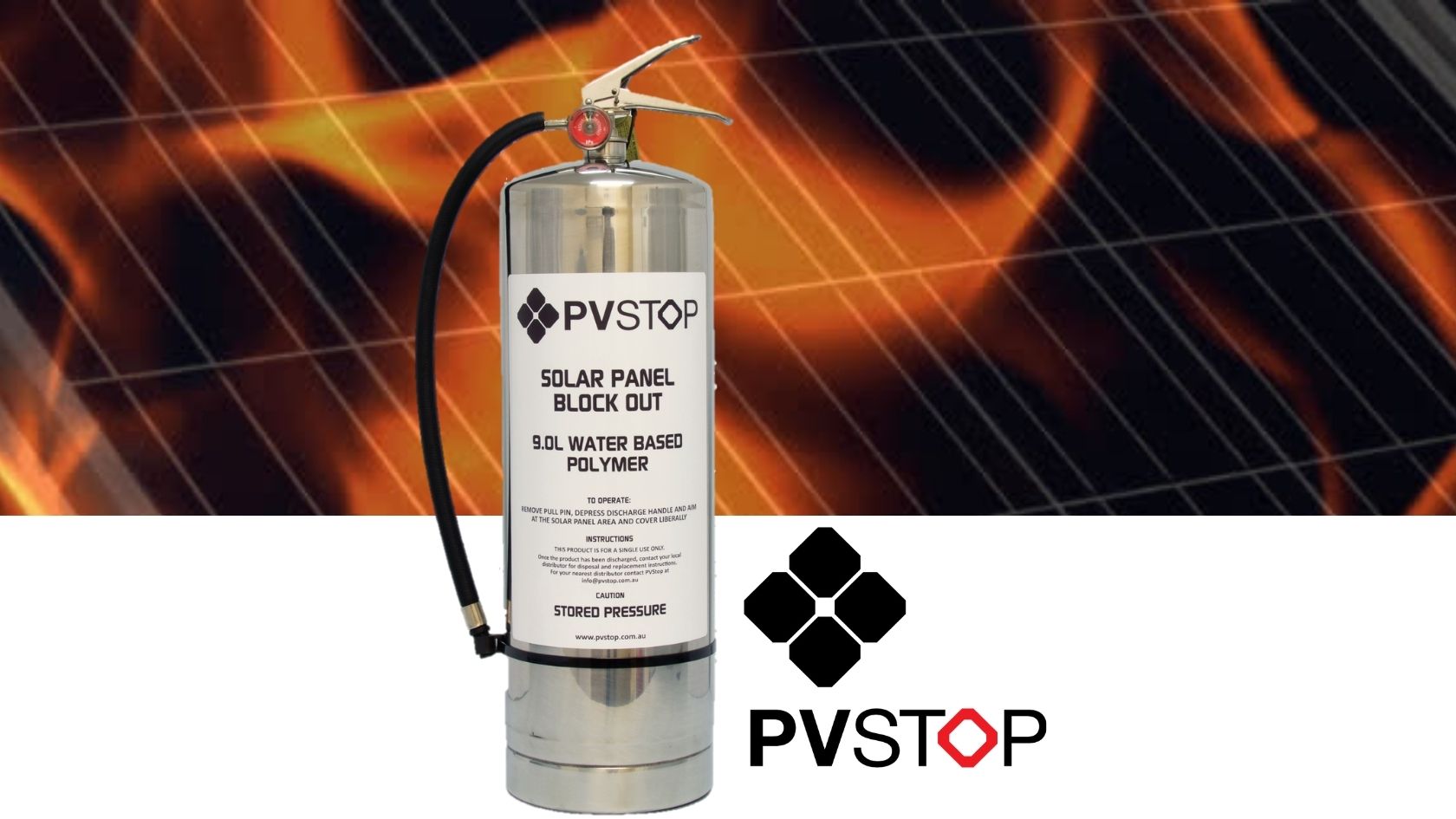
To address these risks, it’s crucial to implement effective safety measures that can quickly and efficiently deactivate solar panels during emergencies. One such solution is PVStop, a liquid blanket designed to safely de-energize PV panels in the event of a fire. By applying PVStop (see the video) to the affected area, emergency responders can mitigate electrical hazards and enhance the safety of firefighting operations.

Training and Awareness:

In addition to deploying safety solutions, proper training and awareness are essential for ensuring the safety of solar installations. Firefighters and other emergency responders should receive comprehensive training on how to identify and manage electrical hazards associated with solar panels. This includes understanding the unique characteristics of solar technology and implementing appropriate safety protocols during firefighting operations. (PVStop Training)

Regulatory Compliance:

Regulatory agencies and industry standards play a crucial role in ensuring the safety of solar installations. Companies operating in the solar industry must adhere to relevant regulations and standards to minimize risks and ensure compliance with safety guidelines. By prioritizing regulatory compliance, businesses can demonstrate their commitment to safety and provide peace of mind to customers. Please see “PV System: how to ensure safety during normal operation p.5

Proposed Interim Guideline for the wiring of LV grid-embedded PV installations not exceeding 1000kVA in South Africa (This guideline should only be used until a national standard is in place)

Please see “PV System: how to ensure safety during normal operation” p.5

Conclusion:

As the demand for solar energy continues to grow, it’s imperative to prioritize safety and implement effective solutions to mitigate risks. By understanding the potential hazards associated with solar installations and deploying appropriate safety measures, we can enhance the safety of solar systems and protect lives and property in the event of emergencies.

Unlocking Solar Panel Safety in South Africa – PVStop Inquiry Blog

Welcome to the LTV Technologies and Supplies blog, dedicated to providing you with all the essential information and updates regarding the introduction of PVStop in South Africa. We understand the importance of ensuring the safety of solar panels during emergencies, and we are committed to bringing this innovative solution to the South African market. This blog will guide you through the process of filling out our website inquiry form, which is designed to capture all the information and inquiries related to PVStop.

Why PVStop?

PVStop is a groundbreaking solution that allows for the safe de-energization of solar panels at their source. It is a non-hazardous water-based compound that can be sprayed on PV panels to block out the sun’s rays in case of an emergency. This simple and effective method is essential for ensuring the safety of firefighters, emergency personnel, PV owners, and many more during critical situations.

Our Mission:

Our mission is to make PVStop readily available in South Africa, in accordance with the National Regulator for Compulsory Specifications (NRS) and South African National Standards (SANS) regulations. We aim to obtain a Letter of Authority to resell the product while working towards a specific regulation for PVStop.

We want to emphasize that PVStop is not classified as a fire extinguisher, which is governed by SANS 1910. Instead, it’s a product that sprays a non-hazardous water-based liquid on PV panels to de-energize them in emergencies, similar to how a fire blanket or tarpaulin would be used. We understand the challenges first responders face when attempting to block out the sun manually, and PVStop provides a safe and efficient alternative.

How You Can Help:

To support our mission and show the urgency of introducing PVStop in South Africa, we encourage you to fill out the inquiry form on our website. This form is designed for various stakeholders, including residential owners, commercial entities, municipalities, installers, contractors, safety officers, and potential resellers.

By providing us with your contact information and specific details about your interest in PVStop, you play a crucial role in expediting the process and helping us keep you updated on our progress.

Our Commitment:

Rest assured that your information is safe with us. We will not share it with any third parties. Your privacy is of utmost importance.

Conclusion:

PVStop is a game-changing solution that promises to enhance the safety of solar panels during emergencies. By filling out our website inquiry form, you are helping us make this innovative product available in South Africa. We appreciate your support and look forward to keeping you updated on our journey.

To fill out the form, please visit our website: PVStop Enquiry

Stay tuned for more updates and progress reports. Your involvement is crucial in bringing PVStop to South Africa and making a significant impact on solar panel safety in the region. Thank you for your support!