Ensuring Workplace Safety in PV Systems: The Vital Role of de energizing the system.
In the realm of electrical safety in the workplace, compliance with Work Health and Safety (WHS) Regulation 36 is paramount. This regulation outlines a comprehensive hierarchy of control measures aimed at managing electrical risks effectively. For first responders addressing potential hazards in a PV system, understanding and implementing these controls, with a focus on de-energizing, are critical.
Hierarchy of Control Measures: A Strategic Approach
- Elimination (Highest Level): The most effective control measure is to eliminate risks by removing hazards. In the context of electrical safety, working de-energized rather than energized is emphasized, aligning with the WHS Regulations’ prohibition of energized electrical work, except in specific circumstances.
- Substitution: Replacing hazardous processes or materials with safer alternatives reduces risks. For instance, using battery-operated tools instead of mains electricity-powered tools can be a safer substitution.
- Isolation: Preventing workers from direct contact with electrical hazards is key. If energized electrical work is unavoidable, de-energizing surrounding parts can be a viable isolation measure.
- Engineering Controls: Utilizing engineering measures like insulation, guarding, and installing Residual Current Devices (RCDs) helps minimize electrical risks effectively.
- Administrative Controls: Safe work practices, such as adequate training, establishing exclusion zones, and using permits and warning signs, contribute to controlling risks.
- Personal Protective Equipment (PPE): While essential, PPE is the last line of defense. It includes items like protective eyewear, insulated gloves, hard hats, and breathing protection, tailored to the specific work requirements.
Choosing Controls and the Significance of De-Energizing with PVSTOP
The hierarchy guides duty holders to choose control measures sequentially, aiming for the most effective options first. Administrative controls and PPE, while crucial, rely on human behavior and supervision and should be considered only when other measures are impractical or as interim solutions.
De-Energizing with PVSTOP: The Ultimate Safety Measure
For PV systems, the revolutionary PVSTOP system emerges as a game-changer. It enables the easy and effective de-energizing of PV systems, eliminating the presence of DC arcs that can reignite flames persistently. By aligning with the highest level of the hierarchy – elimination – PVSTOP ensures the utmost safety for first responders.
In conclusion, understanding and implementing the hierarchy of control measures, with a specific focus on de-energizing through innovative solutions like PVSTOP, is not just a regulatory requirement but a proactive step towards creating a safer working environment in the ever-expanding landscape of PV systems.
The differences between IEC60947-2 vs IEC60898-1 for DC and PV application

As of my last update in September 2021, there are some key differences between IEC 60947-2 and IEC 60898-1 when applied to DC (Direct Current) circuits. Please note that standards might have been updated or revised after my last update, so it’s essential to verify the latest versions. Here are the main differences:
- Scope and application:
- IEC 60947-2: This standard specifically deals with low-voltage switchgear and control gear intended for use in DC circuits up to 2,000 V. It covers a wide range of devices, including circuit-breakers, disconnectors, and switch-disconnectors.
- IEC 60898-1: This standard focuses on low-voltage circuit-breakers for AC (Alternating Current) circuits with rated voltages up to 1,000 V and rated currents up to 125 A. It does not directly address DC applications.
- Voltage and current ratings:
- IEC 60947-2: Designed for DC circuits with voltage ratings up to 2,000 V.
- IEC 60898-1: Designed for AC circuits with voltage ratings up to 1,000 V.
- Breaking capacity:
- IEC 60947-2: The standard specifies breaking capacity requirements for DC circuits, taking into account the differences in arc extinguishing mechanisms between AC and DC circuits.
- IEC 60898-1: The breaking capacity requirements are specified for AC circuits.
- Arc extinguishing:
- IEC 60947-2: Arc extinction in DC circuits is generally more challenging than in AC circuits due to the continuous nature of DC current. The standard addresses the specific requirements for proper arc extinguishing in DC applications.
- IEC 60898-1: Primarily concerned with arc extinction in AC circuits, which have zero-crossing points that aid in arc interruption.
- DC-specific performance testing:
- IEC 60947-2: The standard includes specific performance testing procedures applicable to DC circuit-breakers and other DC switchgear, ensuring their suitability and safety for DC applications.
- IEC 60898-1: Focuses on performance testing for AC circuit-breakers.
- Trip characteristics:
- IEC 60947-2: The standard defines specific trip characteristics that are relevant for DC applications, considering the behavior of DC circuits during faults.
- IEC 60898-1: The trip characteristics are tailored for AC circuits.
- Polarity sensitivity:
- IEC 60947-2: Some DC circuit-breakers may have polarity sensitivity requirements to ensure proper operation in DC they should be totally banned and make sure to buy and install only Non-Polarity DC Breakers.
- IEC 60898-1: AC circuit-breakers typically do not have polarity sensitivity since AC current periodically reverses direction. And can not be used to disconnect an DC arc. Therefore they are extremally unsafe to use in any DC application
It’s crucial to follow the appropriate standard based on your specific application (AC or DC) and adhere to the relevant guidelines to ensure safety and compliance. Always consult the latest version of the standards for accurate and up-to-date information.
Make sure about the certification from your supplier. There are breaker that has certification for AC and will be used for DC and would be polarity breakers and has to be connected in specific way otherwise they could be very dangerous.
Safety on your Solar Panels not to be taking lightly
DC arc refers to an electrical arc that occurs in a direct current (DC) circuit. It typically happens when there is a high voltage differential and a conductive path is created through the air or another medium. The intensity of the arc depends on factors such as the voltage, current, and distance between the conductive materials.
In a typical Installation of 8 x 550W solar panels connected in series. It’s important to note that solar panels produce DC electricity, typically at a voltage range of 12V, 24V, or 48V, depending on the configuration. The total power output of your 8 solar panels would be 8 x 550W = 4,400W (or 4.4kW).
If you are concerned about the potential for a DC arc occurring in this setup, it’s essential to ensure proper wiring, grounding, and protection mechanisms. Here are a few considerations:
- Wiring: Use appropriate-sized wires and cables to handle the current produced by the solar panels. Consult the manufacturer’s specifications or seek the assistance of a qualified electrician.
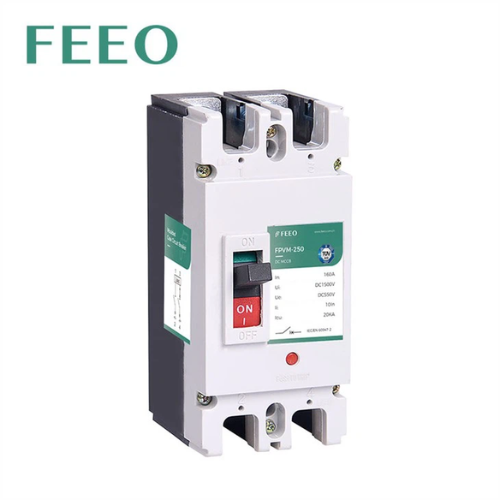
- Circuit Breakers: Install circuit breakers or fuses in the system to protect against overcurrent situations and potential arcs. Properly sized and rated breakers should be used according to the current capacity of the solar panels and wiring.
- Disconnecting Means: Include a disconnecting means, such as a switch or breaker, near the solar panel array. This allows you to isolate the panels from the rest of the system for maintenance or in case of emergencies.
- Grounding: Ensure that the solar panels, inverters, and other relevant components are properly grounded. This helps to minimize the risk of electrical faults and provides a path for fault currents to dissipate safely.
- Compliance with Codes and Standards: Follow the local electrical codes and standards applicable to your area. These guidelines provide specific requirements for the installation and safety of solar panel systems.
It is important to consult with a qualified electrician or solar installer who can assess your specific installation and provide appropriate guidance to ensure the safety and proper functioning of your solar panel system.
Pure Sinewave vs Modified Sinewave Inverters

Pure sine wave inverters and modified sine wave inverters are both types of inverters that convert direct current (DC) electricity to alternating current (AC) electricity, but they do so in slightly different ways.
Pure sine wave inverters produce a waveform that is a perfect sine wave, which is similar to the waveform of the electricity that is supplied by utility companies. This type of waveform is considered to be the “cleanest” form of AC power and is suitable for powering sensitive electronic equipment such as computers and televisions. Pure sine wave inverters are generally more expensive than modified sine wave inverters.
Modified sine wave inverters, on the other hand, produce a waveform that is a square wave or a modified sine wave. This type of waveform is not as clean as a pure sine wave, and can cause some electronic equipment to operate less efficiently or even damage them. Modified sine wave inverters are less expensive than pure sine wave inverters and they are suitable for powering devices such as lights, power tools, and motors.
In summary, if you need to power sensitive electronic equipment, a pure sine wave inverter is the best choice. If you’re looking to power less sensitive equipment such as lights and motors, a modified sine wave inverter is suitable and more cost effective.
AXPERT INVERTERS FROM VOLTRONIC POWER
AXPERT INVERTERS
Yes it is true, they look the same, got the same product codes, the specs are the same, and the fact is they are the same. Meccer, Kodak, RCT, Lux Power comes from the same company Voltronic Power.
These are very good products and becoming the leader in Power Solutions market and also for the close-to-be EV Vehicle era we are moving in. They supply a few of our local suppliers and brand it for them accordingly, there are also some smaller people importing it for their own customers which LTV Tech also working towards but there are a few things to consider. Buying and selling is one thing, but the warranty is a thing to look at and after-sales service is very important. Most suppliers will help but from experience in the marketplace, we at LTV Tech had really great after-sales service with our supplier Rectron which brands its products as RCT.
Here is also a very good explanation of how these systems work and how to implement and install it in your home or office.
Search on our website for RCT inverters and consult us on which specific inverter is best for your specific application
Johan Bosman 0834696127
https://ltvtech.co.za/product-category/solar/pure-sine-wave-inverters/rct-inverter/
See also the link of VOLTRONIC POWER
https://voltronicpower.com/en-US/Product/Detail/Axpert-MKS-1KVA-5KVA
Presenter is Marius Fourie of Green Pro Consulting
The very best Free Malware Software
When searching for the very best free antivirus intelligent interactive multimedia systems program, it’s important to hold a few elements in mind. You should check the license information and read product reviews before setting up any application. In addition , some antivirus courses may not have latest features and could result in false advantages. In general, you should opt for a product with great customer support, so as to make any necessary alterations or needs. Some antivirus programs is probably not compatible with the operating system. When this occurs, a demo may be plenty of.
Most protection software makers offer core antivirus protection for the purpose of cost-free, but could lock away some extra tools or advanced features with respect to paid customers. Most free of charge antivirus software is available for LAPTOP OR COMPUTER, Mac, Android, iOS, and Android. The free version has the the majority of features, but Windows users tend to take advantage of more secureness measures. In addition , free malware programs may be installed on numerous devices because you want. Yet , you should steer clear of downloading any files from unidentified sources. It is best to get a superior version that gives real-time safety.
Another good free of charge antivirus program is Avira Free Secureness Suite. This antivirus course includes remote cracking protection and may protect approximately 10 units. You can buy a subscription arrange for the full deal for around $4. 19 monthly for one LAPTOP OR COMPUTER and seventy dollars a year intended for protection for the purpose of 10 products. If you’re buying a great no cost antivirus method, make sure it has the appropriate for your main system. If you’re not sure which one is right for you, check out the list of the very best free antivirus software listed below.
Wedding DJ makes Social distancing possible with technology

With wedding during the Covid pandemic one of the biggest challenges was to keep guests on social distancing when the party got going with load music and guests want to request their favorite songs.
We always place a book on the table to write down their requests, but it is just to easy later to come and ask, most to all weddings they don’t wear masks at all, and no sanitizing at all either. We have sanitizer on the table, try to sanitize the pen always but when we are busy it became very difficult to impossible to keep distancing and all other protocols.
With setting up our website we saw the possibility to let the people scan QR Code that the guests can scan and fill in the Song Suggestion. We receive an email or WhatsApp and can que it to our playlist when we feel it will be good time to play the requested song.
From the first time we used it, it was amazing how everybody used it without any explanation or announcements. After the first dance the suggestions kept on coming in and without trying to see what they wrote or struggling to hear what song they request, from now on these QR Signs is part of the kit and not only make it easier but also saver for us and also for our costumers and our guests.