LTV Tech
LTV Tech
Navigating Honest Partnerships and Quality in the Renewable Energy Sector

In the ever-evolving landscape of the business world, one thing remains constant: the value of honesty and integrity in relationships. When it comes to the dynamic field of renewable energy, fostering transparent and genuine partnerships becomes not just a preference, but a necessity.

Harnessing Your Expertise

Your journey in the renewable energy sector isn’t just about transactions; it’s about building bridges based on your knowledge and experience. Embrace your specialty, for it holds the key to unlocking the full potential of innovation and progress. By fostering an environment where your expertise flourishes, you contribute not only to your own growth but to the advancement of sustainable energy solutions.

Renewable Energy’s Promising Path

The winds of change have swept in, and the renewable energy sector is firmly establishing its presence for the long haul. Governments worldwide are constantly refining regulations to ensure the safety of installers and consumers alike. With each regulatory update, the sector becomes safer, more reliable, and better suited to shape a cleaner future.

The Quality Predicament

Amidst the promise, challenges emerge. The surge in demand for renewable energy solutions has attracted numerous companies seeking to capitalize on the trend. However, this rush for profit can sometimes compromise the integrity of products and services. Subpar components and shoddy workmanship can not only hamper the effectiveness of renewable energy systems but also pose safety hazards.

Shared Responsibility

As consumers, we play an integral role in shaping the industry’s landscape. The budget constraints faced by many can lead to compromise on quality. But remember, your investment in a sustainable future should extend beyond monetary concerns. Prioritizing quality over quantity can safeguard your investment and contribute to the overall safety of the sector.

A Wise Path Forward

Our advice resonates from a deep understanding of the industry. Instead of chasing an off-the-grid dream with substandard products, consider a pragmatic approach. Opt for a smaller renewable energy system that caters to your essential needs, adhering to international IEC standards and local regulations. By doing so, you’re not just embracing a sustainable future but also ensuring the safety and efficacy of your energy solution.

Exploring Alternatives

In your pursuit of energy independence, remember that options extend beyond electricity. Depending on your location, gas can be an effective alternative for water heating and cooking purposes. It’s all part of creating a holistic energy strategy that aligns with your needs and values.

In conclusion, as we traverse the exciting path of renewable energy, let’s remember that it’s not just about embracing the technology. It’s about forging honest partnerships, prioritizing quality, and making informed decisions that shape a sustainable, secure, and brighter future for all.

#RenewableEnergy #SustainabilityMatters #HonestPartnerships

IEC standards and Verified Certifications

In countries where national standards are not yet updated to the latest technologies and specifications in the solar industry, adhering to international standards like those established by the International Electrotechnical Commission (IEC) becomes crucial. The IEC sets global standards for a wide range of electrical and electronic technologies, including solar applications. These standards provide a common framework for ensuring safety, interoperability, and quality across different countries and regions.

Here are some key points about the importance of IEC standards and verified certifications like CE, TUV, ROHS, etc., in solar applications:

  1. Consistency and Interoperability: IEC standards provide a consistent set of guidelines for designing, manufacturing, and operating solar equipment. Following these standards ensures that different components from various manufacturers can work together smoothly, promoting interoperability and reducing compatibility issues.
  2. Safety: IEC standards emphasize safety considerations for solar equipment and installations. This is particularly important in the solar industry, where equipment is exposed to environmental factors like sunlight and weather. Compliance with IEC safety standards helps prevent electrical hazards and reduces the risk of accidents.
  3. Quality Assurance: Adhering to IEC standards helps maintain a high level of quality in solar products and systems. Manufacturers that follow these standards are more likely to produce reliable and durable equipment, which ultimately benefits end-users and system operators.
  4. Global Acceptance: IEC standards have international recognition and are widely accepted across countries and regions. This global acceptance facilitates trade and collaboration, as equipment that complies with IEC standards is more likely to meet regulatory requirements in different markets.
  5. Market Access: Verified certifications like CE (Conformité Européene) indicate that a product meets relevant safety, health, and environmental protection requirements within the European Economic Area. TUV (Technischer Überwachungsverein) is a trusted certification organization that tests and certifies products for safety and quality. ROHS (Restriction of Hazardous Substances) compliance ensures that products do not contain hazardous materials. Having these certifications can facilitate market access and build trust with customers.
  6. Consumer Confidence: End-users, installers, and system operators gain confidence when dealing with products that carry recognized certifications. Verified certifications provide assurance that the products have undergone testing by independent organizations and meet certain quality and safety standards.
  7. Regulatory Compliance: In regions where national standards are not updated, IEC standards and verified certifications can serve as a basis for complying with local regulations. They demonstrate a commitment to adhering to global best practices even in the absence of up-to-date local standards.
  8. Liability and Warranty: Adhering to recognized standards and obtaining verified certifications can reduce manufacturer liability and warranty claims. Compliance with these standards shows that the manufacturer has taken appropriate measures to ensure the reliability and safety of their products.

In summary, IEC standards and verified certifications play a pivotal role in ensuring the safety, quality, and compatibility of solar equipment and installations. They facilitate global trade, build consumer trust, and serve as a reliable reference point for countries where national standards might not be up to date with the latest industry developments.

Integrating South African National Standards (NRS) compliance with IEC standards and existing certified products is essential for the successful deployment of solar systems in South Africa. Here’s why the alignment between NRS standards, IEC standards, and verified certifications is important:

  1. Regulatory Compliance: NRS standards are specific to South Africa and outline the requirements and regulations for various industries, including the solar industry. Aligning with NRS standards ensures that your solar products and installations meet the country’s regulatory expectations, which can help you avoid legal issues and ensure smooth project implementation.
  2. Local Context: NRS standards are designed to address the unique environmental, climatic, and grid conditions of South Africa. Integrating these standards with IEC standards and verified certifications ensures that solar systems are optimized for local challenges, leading to better performance, reliability, and safety.
  3. Quality Assurance: NRS standards often incorporate elements of international standards, including those from the IEC. By adhering to NRS standards, you can ensure that the quality and safety of your solar products align with both global best practices (IEC) and the specific requirements of the South African market (NRS).
  4. Consumer Trust: For South African consumers and businesses, compliance with NRS standards signals a commitment to quality and safety. When products and installations meet both local and international standards, it instills confidence in consumers, leading to higher adoption rates and customer satisfaction.
  5. Compatibility: Aligning with NRS standards helps ensure that solar equipment and installations are compatible with local grids, infrastructure, and regulations. This can reduce technical complications and ensure seamless integration into the existing energy ecosystem.
  6. Project Approvals: Many regulatory bodies and authorities in South Africa require compliance with local standards like NRS for project approvals. By incorporating NRS compliance alongside international standards, you expedite the approval process and minimize potential delays.
  7. Risk Mitigation: Integrating NRS standards with IEC standards and verified certifications reduces risks associated with non-compliance. It demonstrates your commitment to meeting both global and local requirements, reducing the chances of accidents, failures, and legal complications.
  8. Market Competitiveness: NRS compliance enhances your competitive edge in the South African market. By offering products and services that are aligned with local standards, you position yourself as a provider who understands and caters to the specific needs of the region.
  9. Education and Training: NRS standards can serve as educational tools for local installers, technicians, and operators. Training individuals to work with equipment that meets NRS, IEC, and certified standards ensures that they have the skills needed to install and maintain systems effectively.

In summary, integrating South African NRS compliance with IEC standards and existing certified products ensures that solar systems meet local regulations, are tailored to local conditions, and maintain global quality and safety benchmarks. This alignment fosters regulatory compliance, consumer trust, and successful market penetration in South Africa’s solar industry.

We at LTV will do our best to stay within all these above mentioned regulations and to be able to get to a point where all our products get NRS approval to ensure we only supply the best safety and compliance. It does take a lot of time and money for each product but we will only import the best up to date standards we can get globally to become the lead supplier of quality and best technology products into the South African market.

Installing compliant products to standards in the wrong applications.

The Important aspect of the dangers associated with installing compliant products to standards in the wrong applications. This underscores the significance of not only using compliant components but also ensuring their correct installation and use according to the specified guidelines. Let’s break down the dangers and compare the two scenarios:

1. Installing SANS-Approved Polarity DC Breakers Incorrectly:

  • Dangerous Potential: While SANS-approved polarity DC breakers might be designed to be safe and compliant, installing them incorrectly can indeed pose significant risks. These breakers are designed to handle the flow of current in a specific direction (polarity). If they are installed in reverse or against the intended current flow, they might not operate as expected and could potentially lead to electrical faults, overheating, and fire risks.
  • Fire Hazard: Incorrectly installed polarity DC breakers could cause electrical arcing, overheating, or even a short circuit. This can lead to localized heating and ignition of surrounding materials, potentially causing a fire hazard.
  • Importance of Correct Installation: Proper installation and adherence to manufacturer guidelines are crucial for ensuring that even compliant components function as intended and do not create safety risks.

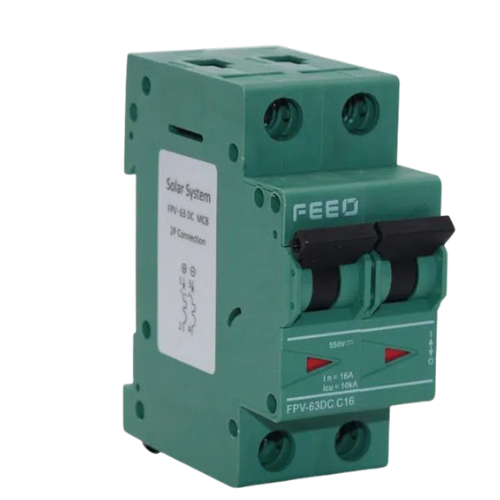
2. IEC Certified Non-Polarity DC Breaker:

  • Installation Flexibility: IEC-certified non-polarity DC breakers, as you mentioned, are designed to operate safely regardless of the direction of current flow. This provides installation flexibility and reduces the chances of errors due to incorrect polarity connections.
  • Reduced Installation Errors: The non-polarity feature minimizes the risk of mistakes during installation, as the breaker can be connected in either direction without affecting its functionality or safety.
  • Enhanced Safety: By reducing the potential for incorrect installation, non-polarity DC breakers can contribute to safer installations with fewer chances of faults or hazards.

In both cases, the key takeaway is that compliance with standards and certifications is just one part of ensuring safety. Correct installation, following manufacturer guidelines, and having a deep understanding of the product’s specifications are equally critical. The dangers of improper installation highlight the need for proper training, quality assurance, and attention to detail when working with electrical components, especially in applications as critical as solar systems.

To mitigate these dangers and risks:

  • Education and Training: Installers and technicians should receive proper training on product installation, specifications, and safety protocols.
  • Manufacturer Guidelines: Always adhere to manufacturer guidelines and specifications for installation, operation, and maintenance.
  • Quality Assurance: Implement quality control measures to verify correct installation and operation before finalizing any solar installation.
  • Supervision and Inspection: Have qualified individuals oversee the installation and conduct thorough inspections to identify any potential errors or hazards.
  • Continual Learning: Stay updated with industry standards, best practices, and advancements to ensure installations are safe and compliant.

By combining compliant products with correct installation practices, the industry can significantly reduce the risks associated with improperly installed components and ensure the safety and reliability of solar systems.

The use of A 125 Amp DC Non-Polarity MCB will fit on which size inverter and battery systems?

The compatibility of a 125 Amp DC Non-Polarity MCB with inverter and battery systems depends on several factors, including the voltage and capacity of the systems.

The amperage rating of the MCB (125 Amps) refers to its maximum current-carrying capacity. In order to determine its compatibility with an inverter and battery system, you need to consider the following:

  1. Inverter Voltage: Check the voltage rating of the inverter. The MCB should be rated for the same voltage to ensure compatibility. For example, if the inverter operates at 12V DC, then the MCB should be suitable for 12V DC systems.
  2. Battery System Voltage: Consider the voltage of the battery system that the inverter is connected to. The MCB should be rated to handle the voltage of the battery system. Common battery system voltages include 12V, 24V, or 48V DC.
  3. Battery Capacity: The capacity of the battery system (measured in ampere-hours, Ah) is also important. The MCB should have an amperage rating equal to or higher than the maximum current that the battery system can deliver. For example, if you have a battery system with a maximum discharge current of 100 Amps, the 125 Amp MCB would be suitable.

It’s important to note that selecting the appropriate MCB is crucial for the safety and performance of your electrical system. If you’re unsure about the compatibility or installation, it’s recommended to consult a qualified electrician or professional who can assess your specific requirements and provide guidance.

C/Rating on batteries – a simple explanation.

The C rating of a battery refers to its discharge rate or the rate at which it can deliver its stored energy. It is typically represented as a multiple of the battery’s capacity. For example, a battery with a C rating of 1C can discharge its entire capacity in one hour, while a battery with a C rating of 2C can discharge twice its capacity in one hour.

To determine the C rating of a battery in your solar system when it is not specified on the spec sheet, you may need to gather some additional information and perform calculations. Here’s a general method you can follow:

  1. Determine the battery’s capacity: Look for the capacity rating of the battery on the spec sheet. It is usually given in ampere-hours (Ah) or milliampere-hours (mAh). For example, if the battery has a capacity of 100Ah, that means it can theoretically deliver 100 amps of current over one hour.
  2. Find the maximum continuous discharge current: Check if the spec sheet provides the maximum continuous discharge current rating. This rating indicates the highest current the battery can continuously deliver without causing damage or significant voltage drop. It is usually mentioned in amps (A) or milliamps (mA). For instance, if the battery’s maximum continuous discharge current is specified as 50A, it means it can deliver a continuous current of 50 amps.
  3. Calculate the C rating: Divide the maximum continuous discharge current by the battery’s capacity to calculate the C rating. Convert both values to the same unit if necessary. Using the previous examples, if the battery has a capacity of 100Ah (100,000mAh) and a maximum continuous discharge current of 50A (50,000mA), the C rating would be:C rating = Maximum continuous discharge current / Capacity = 50A / 100Ah = 0.5C

Therefore, in this example, the battery has a C rating of 0.5C, meaning it can discharge at a rate of 0.5 times its capacity.

Keep in mind that this method assumes the battery can sustain its maximum continuous discharge current without significant voltage drop or damage. It’s always recommended to consult the manufacturer or supplier for accurate information on the C rating if it’s not readily available.

Connecting Inverter to the essentials at DB Box

Disclaimer : Installing your Inverter to the DB Box. Please take note that only qualified persons is allowed to work on the DB Board, this is only for illustration purposes.
Sizing your system cables, breakers and fuses to SANS 10142-1-2:201X specifications

Leading the Charge: Comparing Lead-Acid and Lead-Carbon Batteries for Renewable Energy Storage

Lead-acid batteries and lead-carbon batteries are both types of rechargeable batteries that are commonly used in a variety of applications, including solar energy systems, backup power systems, and electric vehicles. However, there are some key differences between the two types of batteries.

Lead-acid batteries are the most common type of rechargeable battery and have been used for over a century. They consist of a combination of lead plates and an electrolyte solution, typically sulfuric acid. They are relatively inexpensive and have a long lifespan, but they are also heavy, require regular maintenance, and can be damaged by extreme temperatures.

Lead-carbon batteries, also known as advanced lead-acid batteries, are a newer type of lead-acid battery that uses a small amount of carbon in the electrodes to improve performance. The carbon helps to increase the battery’s energy density, which means that it can store more energy in a smaller space. It also improves the battery’s performance at high temperatures and during deep discharge cycles, which makes them more suitable for use in solar energy systems and electric vehicles.

One of the main benefits of lead-carbon batteries is their ability to deliver consistent power output, even in extreme temperatures. They also have a longer lifespan and require less maintenance than traditional lead-acid batteries. They are also more resistant to overcharging and discharging than traditional lead-acid batteries, which makes them ideal for use in remote locations or in applications where regular maintenance is difficult.

In terms of cost, lead-carbon batteries are generally more expensive than traditional lead-acid batteries. However, the additional cost may be offset by the longer lifespan and lower maintenance requirements of lead-carbon batteries.

In summary, both Lead-acid and lead-carbon batteries have their own advantages and disadvantages, Lead-carbon batteries have higher performance in terms of energy density, high-temperature tolerance, and deep discharge cycles than lead-acid batteries, but it is also more expensive.

Batterye hou nie, hoe nou gemaak?
https://www.tiktok.com/@johanmoesh/video/7168860688482356486?is_copy_url=1&is_from_webapp=v1&lang=en

Hier is skakel vir die sonpaneel met 10A Regulator

FFEEO – SOLAR DISTRIBUTION SOLUTIONS INNOVATION & TECHNOLOGY

We at LTV Technologies and Supplies are proud to introduce our new range of products we are in the process to import into South Africa. World-class products that can be used in the Solar industry focusing first on the DC Range there are so my reasons to buy FEEO product and here is just a few of them.

  • Specialized in the solar system for more than 20 years with TUV, CE, CB, and ROHS certificates.
  • FEEO has distributors in Korea, Philippines, Thailand, India, Poland, Russia, Lebanon, etc.
  • With 2 years warranty, perfect production line, and after-sales guarantee.
  • 24-hour service team with Professional product knowledge.
  • FEEO has its own design team for new product development.
  • FEEO’s products are independently developed, designed, and produced, have patent certificates, and all meet IEC standards.
  • FEEO’s products are certified by TUV and CE
  • At the present moment, through direct and indirect channels, we export 60 containers of circuit breakers every year.

From us here at LTV Technologies and Supplies out challenge will be keep stock on hand and to read the market to see witch products to keep in stock first. Therefore please contact us and let us know in which products you will need mostly if we can supply it at reasonable prices to you on site. We will also visit you with samples so that you can feel and look at the quality assured products.

The First orders will be on Air Freight for now as Sea Freight is so delayed and can take up to 5 months currently. The turnaround is 7-10 working days. We will see how we can subsidized the freight cost to be competitive with the local markets, our aim is to give our clients these quality products for the same rates that you are currently paying for the products you currently uses and know mostly all have a 2 year warranty on.

See the Catalogue below

LTVTECH – FEEO Products

Hoërskool Heilbron Matriekafskeid
Hier is die Facebook blad se skakelhttps://www.facebook.com/groups/552328472698270/Hier is LTV Streaming se YouTube blad.https://www.youtube.com/channel/UCej2PNZR5GclJZBwUWfyoVA
Ter nagedagtenis van Melda Houy

Innige meegevoel met al die familie en vriende van ons geliefde Melda Houy.

LTV Tech gaan lewendige uitsending doen van die begrafnisdiens wat Saterdag oggend 11h00 vanuit NG Kerk Heilbron Moedergemeente.  Ons gebruik hierdie blad om na al die skakels te gaan, daar is ʼn groep op FaceBook gestig vir die wat op dit op Facebook sou wil volg, sien die skakel hieronder.

https://www.facebook.com/groups/478516097462624/

Daar gaan ook regstreekse uitsending op YouTube wees en julle kan op die kanaal van LTV Streaming aantekening en dan op die klokkie kliek sodat U wel kennisgewing kan kry sodra ons regstreeks gaan. Sien die skakel van die YouTube kanaal LTV Streaming.

https://www.youtube.com/channel/UCej2PNZR5GclJZBwUWfyoVA

Alle kennisgewings asook elektroniese begrafnis brief sal hier beskikbaar wees.

Deel dus gerus hierdie blad se skakel op julle vriende en familie groepe .

Meegevoel liefde

Johan Bosman

LTV Technology and Supplies