RCG009 – Photovoltaic Panels – v3 – 04/2020
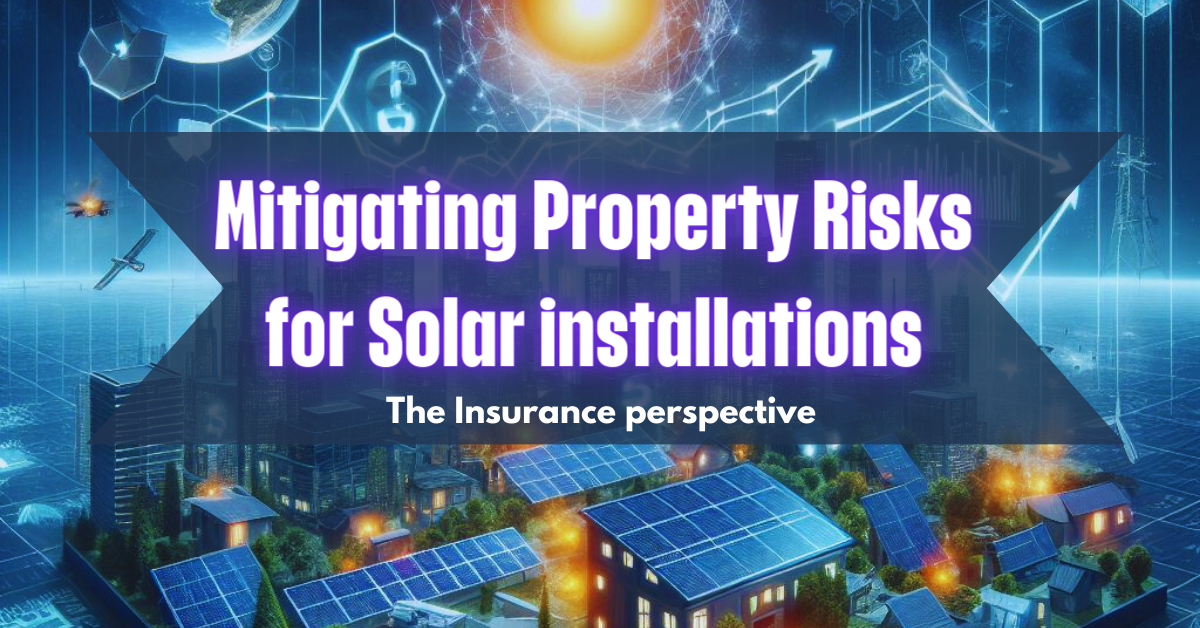
Solar power systems are a sustainable energy solution but come with potential property risks. Understanding these risks and implementing proper safeguards can protect your investment and ensure safety.
Major Property Risks
1. Impact Damage
Hailstorms, falling objects, or malicious acts can cause significant damage to solar panels
2. Extreme Weather
Storms, snowfall, and lightning strikes pose risks to the integrity of solar installations.
3. Electrical Failures and Overheating
ssues such as incorrect plant design, component corrosion, hot spots, damaged modules, and poor-quality connections can lead to electrical failures and overheating, exacerbated by extreme heat and temperature fluctuations.
4. Theft
Copper cables are particularly susceptible to theft due to their high value
5. Fire
Fires can result from electrical damage, arson, or spreading from nearby buildings or fields. The top surface of PV panels is usually tempered glass, but the backing may contain combustible materials like polyester-based encapsulates. Panels with glass, aluminum, or lower combustibility backings are preferred to reduce fire risks.
6. Hot Spots and Shading
Local shading can cause hot spots, leading to panel deterioration and ignition. This risk is mitigated through regular cleaning, inspections, and disconnection devices.
Safeguards and Preventative Measure
Maintenance and Inspections
Regular Maintenance: Includes cleaning, terminal tightening, predictive maintenance, thermographic inspections, and trend analysis of system load and temperature.
Weather-Specific Components: Select components based on local weather conditions using historical data and natural catastrophe tools to reduce weather-related damage risk.
Fire Protection
Fixed Fire Protection: Consider gas suppression systems for large installations, covering transformers, server rooms, inverter rooms, switchgear rooms, and battery storage areas.
Fire Detection: Install automatic fire detection in areas housing inverters, transformers, batteries, and power factor correction equipment.
Temperature Relays and Forced Cooling: Equip transformers with temperature relays and PT-100 sensors. Use forced cooling for equipment exposed to sun radiation, and air-conditioned rooms for batteries.
High-Quality Wiring: Use high-quality MC connectors and limit the length of DC wiring. Provide flame retardation and fire resistance for cables inside buildings.
Remotely Activated DC Disconnection: Install remote DC disconnection near the plant to prevent arcing and cutting through live wires. Clearly mark this facility on the emergency plan. (Note that the PV Modules will always live when the sun is out, the only way to disconnect the panels is to block the sun. Light Blocking coating by PVStop.)
Emergency Plan: Ensure the emergency plan includes a list of responsible persons to assist the fire brigade in disconnecting installations. Pre-plan with the local fire service for access, water supply, and familiarity with electrical shut-offs. (See PV EvacuPlan)

By addressing these key areas, you can mitigate the primary risks associated with solar installations, ensuring a safer and more reliable solar power system. Regular maintenance, appropriate component selection, and thorough emergency planning are crucial for protecting your solar investment from potential hazards.
https://static.rsagroup.com/rsa/commercial-insurance-products/property/e-photovoltaic-panel-risk-control-guide-v3.pdf