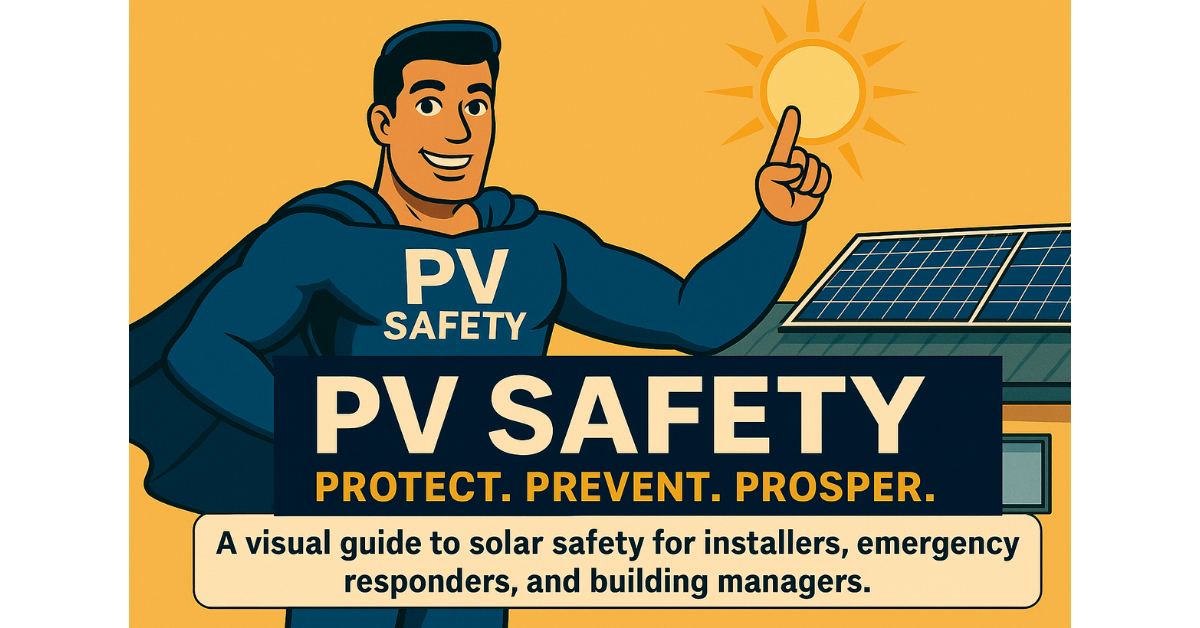
In the ever-evolving world of renewable energy, safety remains paramount. At LTV Technologies and Supplies, we’re excited to introduce our PV Safety Comic Booklet, a visual guide designed to raise awareness and promote best practices in photovoltaic (PV) system safety.
Why a Comic Booklet?
Traditional safety manuals can be dense and overwhelming. We wanted to create something engaging and accessible for everyone — from facility managers and safety officers to first responders and homeowners. By using a comic format, we transform critical safety concepts into memorable, easy-to-understand scenes.
What’s Inside?
Each page of the booklet features our PV Safety Superhero guiding you through essential safety steps, including:
Understanding DC Danger Zones: Know where the risks are and how to navigate them.
Training First Responders and Fire Wardens: Equip your teams with the knowledge to act swiftly and safely.
Regular Maintenance and Early Detection: Stay proactive with thermal monitoring and risk assessments.
Creating Safe Access Points: Maintain safe walkways and buffer zones around PV arrays.
Why This Matters
Photovoltaic systems don’t shut down with a switch. As long as there’s sunlight, there’s energy. This comic booklet reinforces the importance of proactive safety measures to protect lives and infrastructure.
Get Your Free Copy
We invite you to explore the full comic booklet and share it within your network. Let’s work together to make PV systems safer for everyone.
Eskom Compliance Update Recognizes Fire Risks in Solar Installations
The latest EGI Compliance Certificate (Rev 8) from Eskom marks a significant milestone for fire safety in the renewable energy sector. For years, industry experts, safety professionals, and insurers have raised concerns about fire hazards in solar installations, and now, Eskom’s compliance framework officially addresses these risks.
This update is particularly relevant for all Small-Scale Embedded Generators (SSEG), as compliance will soon become mandatory. By March 2026, all SSEGs must be registered for compliance or face potential penalties.
Understanding the New Fire & Fault Guidelines (Note 11, Page 8)
Eskom’s compliance update includes clear steps to reduce fire and fault risks in embedded generation systems. These include:
Electrical faults should never be extinguished with water. Using water on a live electrical system can cause electrocution and worsen the fire.
Generators must be isolated from the Eskom network before shutting down inverters and DC sources. This prevents electricity from flowing back into the system during an emergency.
Solar panels must be covered with fire-retardant material or an equivalent technique to prevent them from generating power during a fire or fault condition.
Why This Matters
For years, LTV Technologies & Supplies, as the South African distributor of PVStop, has been actively engaging with fire safety experts, insurers, renewable energy associations, installers, and safety representatives to address these risks. PVStop is the only solution designed specifically to stop solar panels from generating power instantly, making it an essential fire safety tool for solar installations.
With Eskom now recognizing fire and fault risks within its compliance framework, this is a step in the right direction. The focus is shifting from just installation compliance to also ensuring fire safety in PV systems, which will benefit homeowners, businesses, firefighters, and insurers.
Next Steps for Solar System Owners
Ensure compliance with Eskom’s new safety requirements before the 2026 deadline.
Review your fire safety measures for embedded generation systems, especially in solar installations.
Consider using PVStop, a globally recognized fire-retardant solution that instantly stops solar panel generation in emergencies.
Stay informed by connecting with LTV Technologies & Supplies or visiting the PVStop Informative Website for updates and solutions.
Conclusion
The recognition of fire risks in solar installations within Eskom’s compliance certificate is a significant moment for the industry. LTV Technologies & Supplies and PVStop remain committed to raising awareness, driving safety innovation, and providing solutions to ensure fire risks in solar energy systems are properly managed.
For more information, reach out to LTV Technologies & Supplies or your nearest PVStop reseller.
Renewable energy is safe by design. It is there to make the world a better place, greener, and save on CO2 pollution. The U.S. Energy Information Administration (EIA) projects a historic milestone in 2024 as combined electricity generation from wind and solar is set to surpass coal for the first time on record. [see the article]
As I write this in South Africa,Recent data by Eskom suggests that from March 2022 until the first quarter of 2023, the amount of electricity generated by Small-scale Embedded Generation (SSEGs) in the form of solar panels has risen 350%. [see the article] All countries differ in regulations and installation methods. The entire world is striving to adopt the safest possible approach, considering factors such as the environment, voltage systems used in different countries, governance, etc.
Now, let’s examine a system that came close to complete destruction. However, before doing so, let’s explore some facts about solar systems and the risks that arise, even with a well-done installation by professionals according to specifications.
We need to understand that not all installed systems are done correctly according to designs. There are a few reasons for this:
Firstly, there is always a human factor involved, and people make mistakes (this is one of the topics we will explore).
Hot Connections
Not fully trained personnel in the installation team
MC4 Connections
And more
Not using Quality DC Products and still using AC products that can handle a certain amount of DC Current or Voltages.
Polarity breakers not installed correctly
Non-Polarity breakers designed for DC are available, eliminating confusion on the flow of current. [YouTube Video]
Polarity breakers, can not be disconnect under load, make it confusing for customers in emergencies situations.
MC4 connections are the weakest link in solar array systems. A solution called the Arcbox[website], made of fire refractory materials, safeguards against failures. If they fail, the Arc fire will be contained inside the Arcbox, potentially saving the system and property from being burned down.
Maintenance is crucial. With overwhelming demand, installation companies can’t always get to maintenance promptly. Training for installation can take years, but there needs to be less technical training for companies to perform maintenance and report serious issues to professionals.
Damaged panels should be taken seriously, as there is a misconception that they are not dangerous, only affecting the system’s performance. Maintenance must check the system and make it urgent to replace any damaged panels or parts on the PV Systems. [YouTube Video]
Thermography must become a part of any installation, using infrared to detect problems that the naked eye and even instrumentation might struggle to detect. [YouTube Video]
Now, let’s examine a situation that happened in South Africa in December 2023. We have the authority to use the footage and background of this insurance claim for educational purposes, without disclosing any personal information.
According to the information we have received, a 150kw 3-phase High Voltage system with 3 x 50KW Hybrid inverters and battery backup on a farm in Limpopo province had a fire in the inverter room. They have used 7 x fire extinguisher didn’t completely stop the flames, as for the the installer from Johannesburg (200km) was too far away to assist. The fire kept reigniting after extinguishing it.
The installer advised cutting the live power cable at the panel array. A local installer was contacted, who cut the positive of the array to stop arcing and extinguished the fire. Fortunately, no one was electrocuted. After cutting the wires, the fire was contained and eliminated.
Their conclusion was that the arcing took place inside the conduit duct entering the inverter room, thereby I do not agree, Although this is the only information we can work with, we can make our own conclusions based on the given photos for learning purposes.
For this incident, Rapid Shutdown Devices (Fireman Safety Switch) could have been used to disconnect the panels beyond the point of the fire quickly and safely. These devices are not mandatory in South Africa but can add value and safety. There are two main types:
String Type Rapid Shutdown devices (RSD)[YouTube Video] – They come in different sizes depending on where they will be installed and how many strings. They can switch off by the RSD or via an installed cable where needed. They will also switch off immediately when reaching 70 degrees Celsius.
Modular Type Rapid Shutdown Device (RSD)[YouTube Video] – They are installed very close to the panels themselves via MC4 Connections. They come in different types and sizes to meet specific needs.
Although these Rapid Shutdown devices systems would be able to disconnect to a certain point, they can’t switch off the panels. They are not mandatory in South Africa, but in some countries and states in the USA, Singapore, Thailand etc. they are mandatory. Concerns about this include the risk of adding connections on the cables coming from the panels. String Types RSD requires exact MC4 Connectors from the manufacturers to ensure a perfect match on the MC4 connections, most will include it within the box, but if not make sure from your supplier to buy it separate to make a perfect connection.
In this particular incident, either type of Rapid Shutdown device could have disconnected the panels beyond the fire point. The String Rapid shutdown Device can also now be installed where they cut the wires at a very risky and extremly dangerous attempt. Cutting live wires with lethal amounts of volts and amps was risky and now leading to recommendation of the complete replacement of all wires, rusulting to a very high and risky disconnect. On this it was estimated on 8000m of cabling.
Another option would be to block out the sun using a product called PVStop.[Website] It comes in a fire extinguisher that sprays a black polymer over the center of the panels, bringing the voltage and amps to a very low level by blocking out the sun. This can minimize damage and risks, especially in large systems.
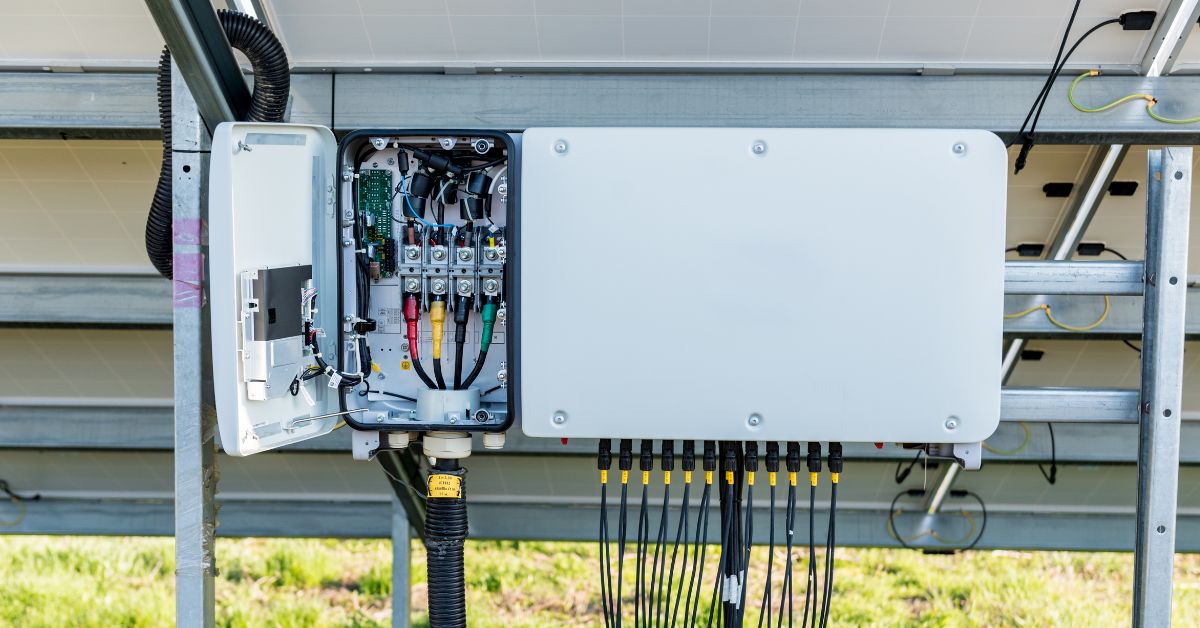
The report suggested that the fire started inside the conduit entering the inverter room, possibly due to damaged wires during installation or rodents chewing the cables. However, based on pictures, the suspicion and conclusion were that it started inside the PV Combiner box, possibly at the bottom of the DC Mini Circuit breaker.
This could be caused by a hot connection, loose exposed wires not using bootlace ferrules, or the use of polarity breakers. Polarity breakers, if used, could have caused the ignition if the flow of the current was disconnected incorrectly.[YouTube Video] AC fuses used in the combiner box are also dangerous if they fail, especially at high voltage.
Quality of components inside PV Combiner boxes is crucial, and some installers try to save money here, risking the system’s safety. Using thermal technology after installation and during maintenance can detect problems early, especially with direct current, which is often underestimated.
To prevent re-ignition risks, additional safety features like a DC Moulded Case Circuit breaker between the PV Combiner box and the MPPT Charge controller of the inverter can be added. This would disconnect the system in emergencies without cutting any wires.
All cables need replacement after such incidents, and it’s safer to replace them all rather than risk missing something that could lead to future issues. The same goes for PV solar cables after cuts made outside at the solar panels. MC4 Connections at the cuts, with an added Arcbox, can protect against risks like bad connections and erosion.
Another option is to add a Rapid Shutdown Device – String Type at the place where the cables were cut. This would add value and safety for future emergencies and maintenance inside the PV Combiner box.
Although fires with solar systems are rare, it takes only a small fault or damaged component to cause significant damage and risk serious injury or loss of life. Investigating these incidents thoroughly is crucial to making systems safer and eliminating risks in the future. It is essential to implement solutions like PVStop in emergency situations to safely de-energize systems and prevent further
In the pursuit of sustainable energy solutions, the installation of solar panels in public spaces has become increasingly common. However, with this eco-friendly initiative comes a significant responsibility that cannot be overlooked. Neglecting damaged solar panels in areas frequented by the public, such as shopping centers, hospitals, and schools, can have severe consequences, ranging from public safety hazards to legal liabilities. Here are essential considerations that underscore the responsibility of solar panel owners in these spaces:
1. Public Safety Concerns:
In public spaces, the risk of accidents and injuries escalates when damaged solar panels are left unattended and unsecured. Proper fencing and security measures are crucial to prevent unintentional contact and ensure the safety of individuals within the vicinity.
2. Electrocution Hazards:
Damaged solar panels in public areas can expose people to the risk of electrocution, especially if live electrical components become accessible due to the damage. This danger is exacerbated in wet conditions, where rainwater can create a conductive path, increasing the potential for electric shocks.
3. Fire Hazards in Public Spaces:
The possibility of a fire stemming from damaged solar panels in a public area poses significant risks to people, property, and the environment. Prompt response to signs of overheating or electrical issues is essential to avert potential fires.
Additional Considerations:
a. Liability Issues:
Neglecting visibly damaged solar panels can lead to legal liabilities. Property owners, maintenance personnel, or system operators may be held accountable if negligence in addressing known issues results in harm or property damage.
b. Regulatory Compliance:
Adhering to local regulations and standards governing the installation and maintenance of solar panels is critical. Failure to comply may result in legal consequences and fines.
c. Emergency Response Challenges:
Emergency response teams may encounter difficulties in dealing with incidents involving damaged solar panels. Proper risk identification and coordination with relevant authorities are vital to effectively mitigate potential harm.
d. Negative Public Perception:
Neglecting damaged solar panels in public areas can lead to negative public perception, damaging the reputation of property owners, operators, or the broader solar industry. Proactive maintenance and swift response demonstrate a commitment to safety and environmental responsibility.
In light of these potential dangers and considerations, addressing any damage to solar panels in public spaces is not just a recommendation; it is a responsibility. Regular inspections, immediate action upon discovering damage, and collaboration with professionals are essential to ensure public safety, regulatory compliance, and the preservation of a positive public image. Clear signage and barriers play a pivotal role in minimizing unauthorized access to damaged solar panels, further enhancing safety in public areas. The journey towards sustainable energy must be accompanied by a steadfast commitment to safety and responsibility, ensuring a brighter future for all.
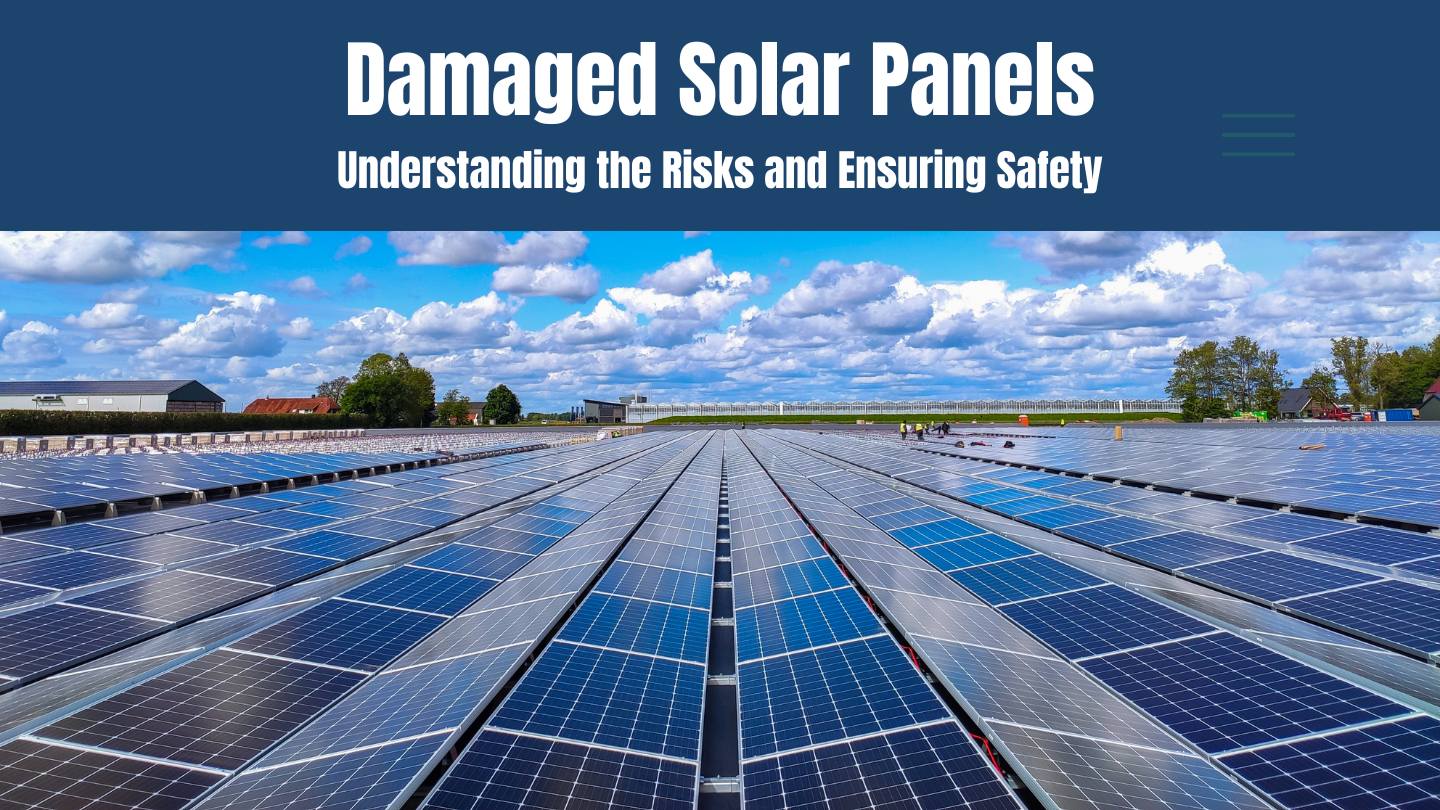
The global surge in solar energy adoption, encompassing residential and commercial sectors, brings us closer to a sustainable future. Despite this positive trend, the challenges inherent in manufacturing, transportation, and the ongoing evolution of solar technologies demand our attention, particularly when it comes to damaged solar panels. Ensuring the safety of lives, protecting properties, and safeguarding the longevity of renewable energy investments is paramount.
Understanding Solar Panels:
Before we delve into the risks associated with damaged solar panels, let’s establish crucial facts about these energy-generating marvels:
Photovoltaic (PV) cells, the foundation of solar panels, harness energy directly from sunlight without the need for chemicals or moving parts.
Solar panels operate continuously in the presence of light, and their output remains active, unable to be switched off.
Generating Direct Current (DC), solar panels behave differently from Alternating Current (AC), potentially creating a substantial arc during disconnection or short-circuiting.
Configured in series and parallel, solar panels result in high DC voltage and current throughout the system.
Risks Associated with Damaged Solar Panels:
This article focuses on visible damages caused by external factors such as hailstorms, fallen trees, vehicle collisions, or structural failures, all of which pose significant risks:
Arcing Hazards: Damaged panels may initiate arcing, leading to high temperatures that can rapidly escalate into a fire due to the continuous nature of DC arcs.
Melting and Toxic Materials: High-temperature DC arcs can melt the glass, releasing toxic materials used in solar panels. The resulting droplets may cause further damage to the roof structure and become a real fire hazard.
Detection Challenges: Damaged panels may go undetected in their early stages. Although inverters often have arc fault detection, it occurs only at the inverter, potentially allowing the spread of fire.
Electrocution Risks: Exposure to wet conditions can lead to energy jumps onto structures, presenting a risk of electrocution. While proper earthing is essential, certain situations may still pose a risk.
Case Study: The Shopping Mall in South Africa
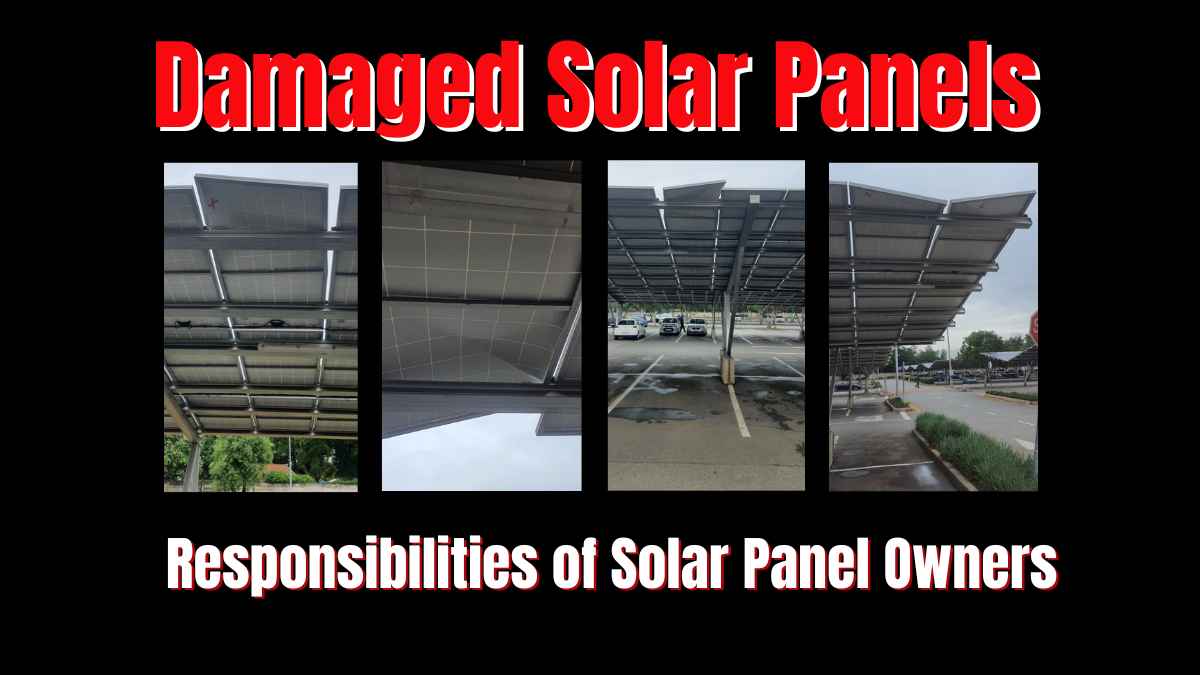
To highlight the severity of these risks, consider the case of a shopping mall in South Africa. Disturbingly, after photographs were taken and brought to the mall’s management’s attention, no immediate action was taken. The damaged solar panels posed a potential fire hazard, and the lack of awareness regarding DC voltage risks was evident. This real-life example exemplifies the prevalent misconception that DC voltage is harmless and underscores the urgent need for industry-wide education on the risks associated with damaged solar panels.
Solution: Implementing Height Restrictions with Boom Gates
To address such risks in areas prone to vehicle damage, a practical solution involves implementing height restrictions with boom gates at entrances to parking areas where solar carport arrays are installed. This preventative measure serves as a physical barrier, preventing oversized vehicles from entering and causing damage to the solar panels. Much like the boom gates found in underground parking lots, this solution ensures that vehicles exceeding height limits are unable to access spaces where the carport arrays are installed, significantly reducing the likelihood of damage.
Addressing the Risks and Ensuring Safety:
Education is Key: Both installers and system owners must be educated about potential risks, fostering awareness to prevent dangerous incidents such as fires and electrocutions.
Regular Inspections: Periodic inspections by qualified professionals are necessary to identify and address any damages promptly.
Emergency Response Plans: Develop and communicate emergency response plans to mitigate the impact of incidents like fires or floods.
Height Restrictions and Boom Gates: Implementing height restrictions, such as boom gates in parking spaces, can prevent damages caused by oversized vehicles, ensuring a safer environment for solar installations.
Solar energy’s promise for a sustainable future is substantial, but understanding and managing associated risks are imperative. By recognizing the dynamics of solar panels and proactively addressing visible damages, coupled with innovative solutions like height restrictions with boom gates, we can ensure the safety of individuals and the investments made in renewable energy systems. The shopping mall example serves as a stark reminder of the need for education, awareness, and preventive measures to create a secure and thriving solar energy industry.
Date: 5th December 2023 | Time: 09:00 South Africa Time
Introduction:
The global push for renewable energy, driven by initiatives such as the UN 2030 targets to reduce CO2 emissions, has seen remarkable progress. However, as we approach the end of 2023, challenges persist, with load shedding issues in countries like South Africa. The solar industry, in particular, has experienced exponential growth, installing a staggering 4500MW of PV systems in the first 9 months of the year. Amidst this growth, it’s crucial to address safety concerns for first responders, who play a pivotal role in emergencies involving photovoltaic (PV) systems.
The Need for PV Safety:
While the statistics on fires within PV systems are minimal, even a small percentage can result in a significant number of incidents globally. The evolving regulations and constant influx of new products into the market demand a focus on the safety of those responding to emergencies involving PV installations. In the fast-paced world of solar technology, it’s essential to equip first responders with the means to rapidly and safely de-energize PV systems.
Webinar Focus: PV Safety – Risks and Solutions for First Responders
On the 5th of December 2024, at 09:00 South Africa Time, PV industry experts Jim Foran, Director at PVStop International Pty Ltd (Australia), and Alex Keene, European Sales & Marketing Manager at PVStop International Pty Ltd (UK), will host a webinar titled “PV Safety – Risks and Solutions for First Responders.” With their extensive experience collaborating with first responders globally, they will shed light on the challenges faced and present an innovative solution: PVSTOP.
About PVSTOP:
PVSTOP is a cutting-edge light-blocking compound designed to rapidly, effectively, and safely de-energize PV arrays. Already in use by several fire brigades worldwide, PVSTOP ensures that first responders can perform their duties without unnecessary risks associated with PV system emergencies.
Webinar Details:
Date: 5th December 2024
Time: 09:00 South Africa Time
Presenters: Jim Foran (PVStop International Pty Ltd, Australia) and Alex Keene (PVStop International Pty Ltd, UK)
Topic: PV Safety – Risks and Solutions for First Responders
Q&A Session: A chance for participants to engage with the experts after the presentation
Who Should Attend:
This webinar is a must-attend for anyone involved in the renewable energy sector (installation or distribution), individuals with PV systems on their premises (commercial or residential), professionals in the insurance, fire and safety industries, and, most importantly, first responders. The insights shared will be invaluable for anyone looking to enhance their understanding of PV safety.
Looking Ahead: PV Safety Conference in March 2024
This webinar serves as a precursor to our larger initiative – a PV Safety Conference scheduled for March 2024 in South Africa. The conference will focus on education, prevention, and the safety of first responders. Registration for the conference will be available in February 2024.